Species · Small Pet
Chinchilla
Chinchilla lanigera
Andean mountain rodent with the densest fur of any land mammal, nearly lost to the fur trade and kept as a companion for a century.
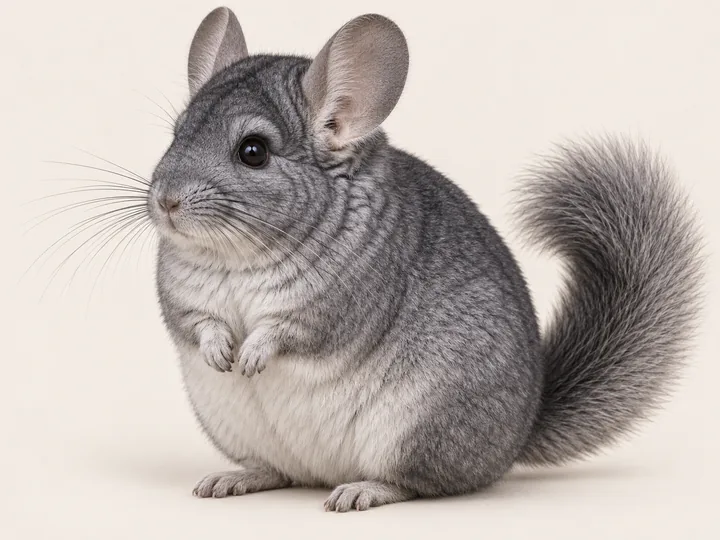
Nobody who strokes a chinchilla forgets it — the coat is a physical impossibility made fur. The animal underneath is a long-lived, crepuscular acrobat with three non-negotiables: it must stay cool, because that coat and warm rooms are a lethal combination; it must bathe in dust, not water; and its teeth never stop growing, which makes hay and gnawing the difference between a pet and a patient. Buy one as a twenty-year commitment to air conditioning, or not at all.
At a glance
- Lifespan
- 10–20 years
- Adult weight
- 400–600 g
- Daily attention
- 1–2 hrs, evenings — they are crepuscular
- Alone time tolerated
- Better in same-sex pairs
- Minimum housing
- Tall multi-level cage; they leap
- Diet
- Hay-first, like a rabbit; treats are where it goes wrong
- Handling
- Gentle and quick; never grab the fur
- With children
- Calm older children; too fast and fragile for young ones
- With other pets
- Prey animal — keep separate
Breeds · 4 listed
Standard grey is the wild colour; beige, black velvet and white are ranch mutations. The coat care and the heat rule are identical in all of them.
-
Standard grey
-
Beige
-
Black velvet
-
White
Right for you if
- The room it lives in stays cool in summer, reliably, even during a heatwave.
- Evening-active suits your household rhythm.
- A pet you mostly watch and occasionally handle is the right speed.
- Two decades of the same routine reads as comforting, not confining.
Wrong for you if
- Summer cooling is hope-based. Heat kills this species.
- You want a cuddly, carry-around pet; the fur and the frame both say no.
- A young child would be the main keeper.
- Dust baths flung around a bedroom would end the arrangement.
Welfare and sourcing — read this part
- A third of apparently healthy chinchillas show signs of subclinical dental disease at routine examination — the cheek teeth elongate quietly.1 Drooling, slow eating or a wet chin is a vet visit, not a quirk, and unlimited hay is the preventive that matters.
- The species is adapted to 18 to 27°C, and beyond that — especially in humidity — heatstroke is a serious risk.1 In an Australian summer that makes the cooling plan part of the enclosure, not an extra.
- Dust baths two to three times a week, up to fifteen minutes at a time, are how this coat is maintained1 — never water. A chinchilla that has been bathed wet has been harmed by kindness.
- Buy from a breeder who lets you handle the animal and check its front teeth, and ask what the parents eat. Hay in the answer is a good sign; a bowl of muesli mix is not.
Sources
- Chinchillas. MSD Veterinary Manual 2026. Accessed 2026-09-05. International MSD Veterinary Manual Abnormalities of subclinical dental disease have been reported in one-third of apparently healthy chinchillas at routine examination, centring on cheek-tooth elongation. The species is adapted to 18.3–26.7°C, with heatstroke a serious risk beyond that, especially in humidity. Dust baths two to three times a week, up to 15 minutes.
Every source here was checked, not recalled. Where this page makes a health statement and no source appears against it, that is not an oversight we have hidden — it means the claim is not yet sourced, and the build reports how many are in that state.
Availability, registration and keeping requirements differ from place to place. Check the rules where you live before you commit to any animal — we describe animals, not law.