Breed · Dog
Siberian Husky
Chukchi sled dog from northeastern Siberia, bred to pull light loads over long distances in company, on almost no food.
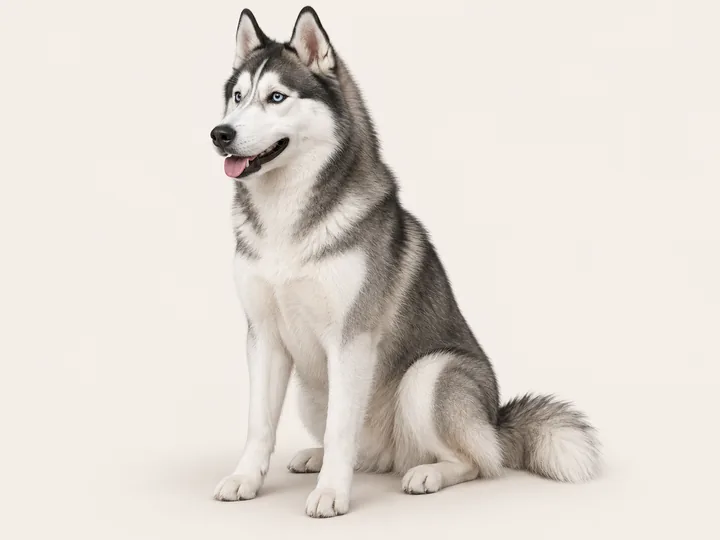
Huskies are stunning, sociable, endlessly photogenic — and they are the breed most consistently bought for their looks and surrendered for their nature. That nature is honest: a Husky was built to run enormous distances in a pack, thinks fences are suggestions, treats recall as optional, sings rather than barks, and regards small fleeing animals as a service opportunity. None of that is misbehaviour; all of it is the breed working as designed. Runners, mushers, sledders and the truly committed get a magnificent dog. Everyone else gets a beautiful problem.
At a glance
- Lifespan
- 12–15 years
- Adult weight
- 16–27 kg
- Daily exercise
- 2 hrs plus, genuinely, in cool hours
- Trainability
- Clever, unbiddable — knows, may decline
- Alone time tolerated
- Poor; a lonely Husky renovates
- Shedding
- Extreme; twice-yearly fur events plus baseline
- Noise level
- Howls and talks more than barks
- With children
- Good — friendly with everyone, including burglars
- With other pets
- Dogs yes; cats and pocket pets are prey
Colours · 4 listed
Grey, black, red or white, with or without the mask, brown or blue eyes or one of each. Colour is the one part of the breed that behaves.
-
Grey & white
-
Black & white
-
Red & white
-
White
Right for you if
- You run, bike, hike or mush, in volume, and want a partner built for exactly that.
- Fencing is tall, dig-proofed, and gates latch — audited by someone cynical.
- A dog with its own agenda amuses rather than frustrates you.
- Daily brushing in moulting season and fur in your coffee are acceptable terms.
Wrong for you if
- It will be alone in a yard through the working day; the neighbours will document the results.
- A cat lives in the house.
- You want off-lead reliability. Genuinely: you do not get it with this breed.
- The climate is hot and the exercise plan was midday walks.
What to ask a breeder
- The UK Kennel Club’s good-practice list for the breed is genetic diversity and eye testing — with gonioscopy for glaucoma predisposition — and hips alongside.1 Eyes are this breed’s paperwork; annual certificates are the standard to expect.
- Ask for hip scores in writing.
- Ask the breeder what happens to the puppies they place that do not work out, and how many come back. A Husky breeder with a rehoming clause and a straight answer is one who knows their breed’s buyers.
Sources
- Siberian Husky — breed health and pre-breeding screening. The Royal Kennel Club 2026. Accessed 2026-09-04. United Kingdom The Royal Kennel Club The UK Kennel Club's published screening lists for the breed: good practice is genetic diversity and eye testing with gonioscopy for PLA; best practice adds hips.
Every source here was checked, not recalled. Where this page makes a health statement and no source appears against it, that is not an oversight we have hidden — it means the claim is not yet sourced, and the build reports how many are in that state.
Availability, registration and keeping requirements differ from place to place. Check the rules where you live before you commit to any animal — we describe animals, not law.