Breed · Dog
Rhodesian Ridgeback
Southern African hunting dog bred from European stock and Khoikhoi dogs to track lions and hold them at bay — the ridge down the back is the breed’s signature.
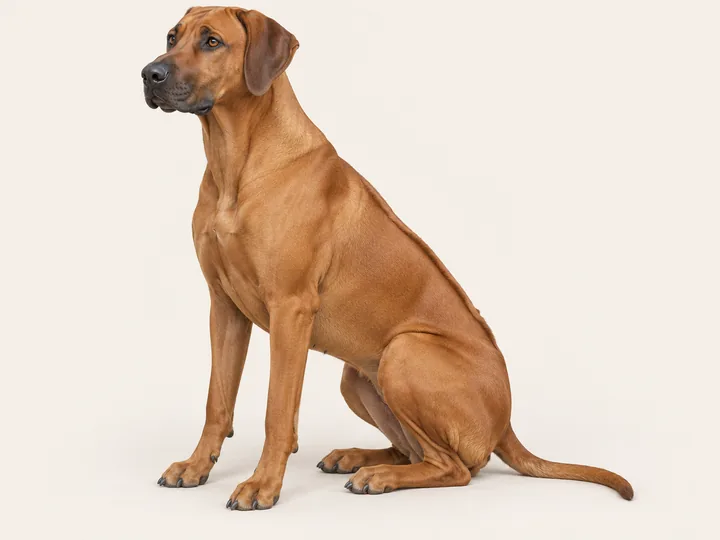
The Ridgeback is a serious athlete wearing a housecat’s off-duty manner: quiet, clean, devoted to its family, reserved with everyone else, and magnificent to live with when its exercise and training are taken seriously. It is also forty kilograms of muscle with hunting heritage and its own opinions, which makes consistency the entire game — a Ridgeback tests a soft boundary precisely once a season, forever. The ridge itself comes with a question to ask breeders, and the breed’s scheme lists are refreshingly concrete for a big dog.
At a glance
- Lifespan
- 10–12 years
- Adult weight
- 29–41 kg
- Daily exercise
- 90–120 min
- Trainability
- High, with an independent core
- Alone time tolerated
- Moderate with exercise done first
- Shedding
- Light
- Noise level
- Very low
- With children
- Very good with its own; sheer mass with toddlers
- With other pets
- Dogs generally fine; cats only if raised together
Colours · 2 listed
Light wheaten through red wheaten — one colour family, and the ridge matters more to the fancy than any shade of it.
-
Light wheaten
-
Red wheaten
Right for you if
- You have handled strong dogs and enjoy consistent training as a lifestyle.
- Ninety minutes of real exercise is your baseline, rain included.
- You want a quiet, clean, low-odour dog that guards by presence alone.
- A reserved dog that saves its affection for the household appeals to you.
Wrong for you if
- First dog, or a household where training rules change with the weather.
- Cats or pocket pets live free-range in the house.
- Nobody can hold forty muscular kilograms on a lead when a rabbit happens.
- You want a dog that loves your dinner guests. It will tolerate them, from a distance.
What to ask a breeder
- The UK Kennel Club’s good-practice list for the breed is concrete: the DNA test for juvenile myoclonic epilepsy plus hip and elbow scoring, with degenerative myelopathy DNA alongside.1 Ask for all three by name, in writing.
- Ask whether every puppy in the litter has been checked for dermoid sinus by a vet, and what was found. It is a hands-on check along the ridge line that a good breeder does as routine — the answer you want is specific, not startled.
- Meet the mother, and judge reserve against nerves: a correct Ridgeback is indifferent to strangers, not worried by them. In a guarding-heritage breed that distinction is the whole temperament question.
Sources
- Rhodesian Ridgeback — breed health and pre-breeding screening. The Royal Kennel Club 2026. Accessed 2026-09-04. United Kingdom The Royal Kennel Club Good practice is the DNA test for juvenile myoclonic epilepsy plus hip and elbow scoring; best practice adds the degenerative myelopathy DNA test.
Every source here was checked, not recalled. Where this page makes a health statement and no source appears against it, that is not an oversight we have hidden — it means the claim is not yet sourced, and the build reports how many are in that state.
Availability, registration and keeping requirements differ from place to place. Check the rules where you live before you commit to any animal — we describe animals, not law.