Breed · Dog
Afghan Hound
Ancient sighthound of the Afghan mountains, bred to course game over rock and scree, carried west as an aristocrat of the show ring.
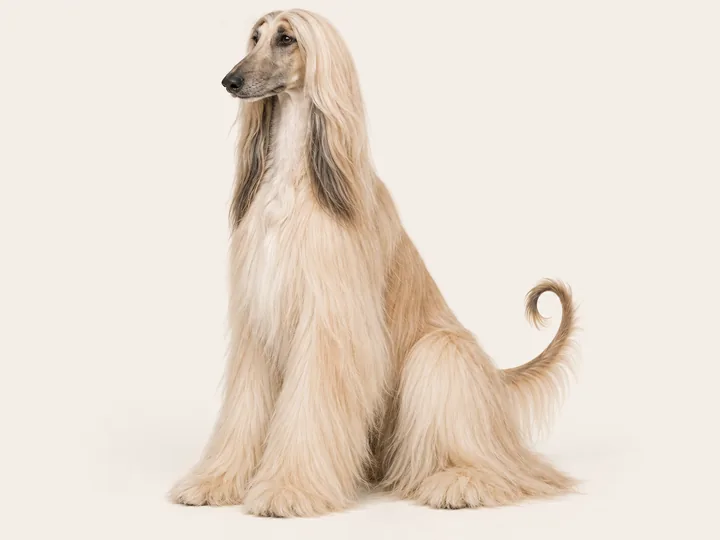
The Afghan is what happens when a sighthound grows couture: underneath the silk is a fast, independent, faintly aloof coursing dog with the standard sighthound settings — explosive outside, ornamental indoors, deaf to recall the moment something runs. The coat is the ownership decision. It is hair, grown long, and it mats: hours a week, every week, for the life of the dog, or a standing grooming bill and a shorter clip the show fraternity will never forgive you for. The dog itself is comparatively sound; the commitment is the mirror, the brush and the fence.
At a glance
- Lifespan
- 12–14 years
- Adult weight
- 23–27 kg
- Daily exercise
- 60–90 min with real sprints in it
- Trainability
- Independent; knows, considers, may decline
- Alone time tolerated
- Moderate
- Shedding
- Low shed, constant grooming
- Noise level
- Low
- With children
- Good with calm, older children
- With other pets
- Dogs fine; cats and small pets are quarry
Colours · 4 listed
All colours are permitted and none changes the dog. The coat texture is the same commitment in every one of them.
-
Black
-
Cream
-
Red
-
Brindle
Right for you if
- Grooming is a hobby you want more of, or a bill you have already priced.
- You find an independent, cat-like dog intriguing rather than insulting.
- A fenced sprint space or safe open ground is reachable most days.
- Elegance in the house matters to you and you will trade obedience for it.
Wrong for you if
- You want a dog that comes when called. This one files the request.
- The grooming plan is "we’ll see". The coat does not negotiate.
- Rabbits, cats or small dogs run free where the dog would exercise.
- You want visible adoration. Afghans do devotion privately.
What to ask a breeder
- The UK Kennel Club’s lists for the breed are unusually short — genetic diversity as good practice, hip scoring alongside — with no disease-specific DNA test on either.1 On paper that is what a comparatively sound breed looks like; ask for the hip scores anyway.
- Tell your vet the breed before any anaesthetic and ask the breeder whether their vet knows sighthounds — lean, low-fat dogs handle some drugs differently, and both should talk about it without prompting.
- Ask to see the parents’ coats up close, unclipped, and ask honestly what the breeder’s weekly grooming routine is. You are not auditing the dog; you are auditing the next twelve years of your own calendar.
Sources
- Afghan Hound — breed health and pre-breeding screening. The Royal Kennel Club 2026. Accessed 2026-09-04. United Kingdom The Royal Kennel Club The UK Kennel Club’s lists for the breed: good practice is prioritising genetic diversity; best practice adds hip testing. No disease-specific DNA test appears on either list.
Every source here was checked, not recalled. Where this page makes a health statement and no source appears against it, that is not an oversight we have hidden — it means the claim is not yet sourced, and the build reports how many are in that state.
Availability, registration and keeping requirements differ from place to place. Check the rules where you live before you commit to any animal — we describe animals, not law.