Breed · Cat
Turkish Van
From the Lake Van region of eastern Turkey. The swimming reputation is genuine and unusual among cats.
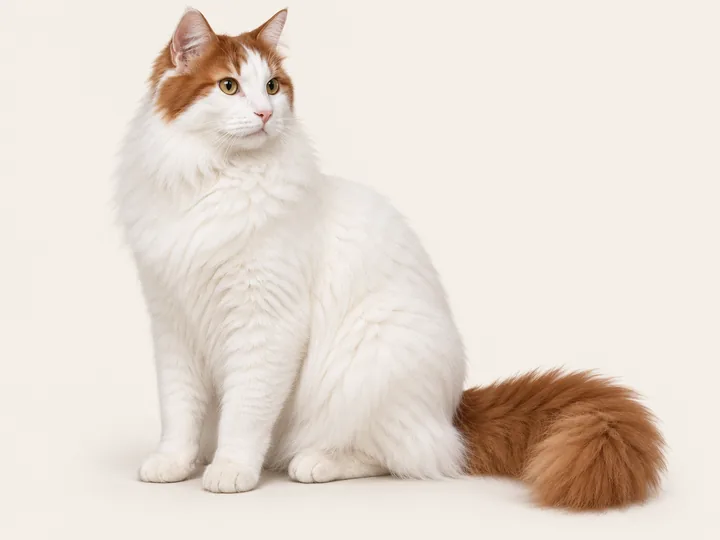
Vans are big, strongly built, and famously willing to get wet — many will play in water and some will swim. They are affectionate on their own terms and dislike being restrained, which makes them a poor fit for anyone wanting a cat to carry about. The coat is semi-long and single, and as with the Angora, white colouring brings a hearing question with it.
At a glance
- Lifespan
- 13–17 years
- Adult weight
- 4.5–9 kg
- Daily attention
- 60–90 min
- Alone time tolerated
- Reasonably well
- Grooming
- Twice weekly
- Noise level
- Talkative
- With children
- Good with older
- With other pets
- Generally easy
- Indoor only
- Secure outdoor ideal
Colours · 6 listed
The classic Van pattern is colour on the head and tail only, on a white body. Fully white cats also occur.
-
Auburn Van
-
Cream Van
-
Black Van
-
Blue Van
-
Tabby Van
-
White
Right for you if
- You want a large, active cat and can give it space and height.
- You are amused rather than annoyed by a cat in the sink.
- You will ask about hearing testing for a mostly-white kitten.
- You want affection without being able to pick the cat up.
Wrong for you if
- You want a cat you can hold and carry.
- You have a small flat.
- You leave water where a strong cat could get into trouble with it.
- You want a quiet, sedentary animal.
White coats, hearing, and size
- Congenital deafness in cats is tied to the white coat gene, with the highest prevalence in white cats and particularly blue-eyed ones, arising from degeneration of the cochlear blood supply at three to four weeks old.1
- One-sided deafness is the version that goes unnoticed, and a brainstem auditory evoked response test is what actually detects it.1 Ask whether mostly-white kittens have been tested.
- These are heavy, powerful cats that mature slowly. Buy the furniture and the climbing space for the adult, not the kitten.
Sources
- Strain GM. Congenital deafness and its recognition. Veterinary Clinics of North America: Small Animal Practice 1999; 29(4):895-907. International doi:10.1016/s0195-5616(99)50079-x PMID 10390790 Congenital deafness in cats is tied to the white coat gene, and prevalence is highest in white cats, especially blue-eyed ones. The cochlear blood supply degenerates at three to four weeks of age. One-sided deafness is easy to miss and is diagnosed properly only by a brainstem auditory evoked response test.
Every source here was checked, not recalled. Where this page makes a health statement and no source appears against it, that is not an oversight we have hidden — it means the claim is not yet sourced, and the build reports how many are in that state.
Availability, registration and keeping requirements differ from place to place. Check the rules where you live before you commit to any animal — we describe animals, not law.